What Is Zero-Click Search?
When visitors find the information they need on a search results page without having to click through to another website, it’s referred to as zero-click search. Featured snippets, knowledge panels, local packs, calculators, maps, and other search tools have historically been used to accomplish this, but the emergence of generative AI is making the phenomena much more significant for digital marketers. 68.01% of Google searches in the first four months of 2026 ended without a click, compared to 60.45% in 2024, according to recent 2026 data published by Search Engine Land, which cited SparkToro’s analysis. (Land of Search Engines) This does not imply that websites are no longer relevant; rather, it indicates that the process of viewing a brand and going to its website is evolving.
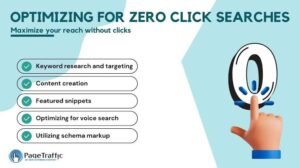
Think about the way people search today. A potential customer might ask Google a broad question, receive an AI-generated answer, see several companies mentioned, refine the question, compare alternatives and only then visit a website when they are ready to make a decision. The website may receive fewer informational clicks, but the brand can still influence the customer’s decision much earlier. This is why modern digital marketing needs to move beyond the old idea that every successful search impression must produce a website visit.
Why Zero-Click Search Is Growing
One major reason behind Zero-Click Search is that search engines are answering more questions directly. Google’s AI Overviews place generated summaries above traditional results, while AI Mode provides a more conversational search experience. Google’s own Search documentation now includes guidance for optimizing content for generative AI features and specifically highlights the continued importance of SEO alongside the need for non-commodity content. (Google for Developers)
The numbers show why marketers should pay attention to Zero-Click Search. Ahrefs’ December 2025 analysis of 300,000 keywords found that searches displaying an AI Overview were associated with a 58% lower average click-through rate for the top-ranking result compared with its comparison sample. That is a significant shift from the traditional assumption that reaching position one automatically means receiving a large proportion of available clicks.
From Ranking for Clicks to Ranking for Visibility
Traditional SEO often focused on a relatively straightforward equation: identify a keyword, achieve a high ranking, attract clicks and convert visitors. That model still matters, but it is no longer complete. Modern search requires marketers to think about brand visibility, citations, topical authority, search intent, entity recognition and consideration alongside rankings.
A business might publish an article answering a basic question and receive fewer clicks because Google answers the question directly. Yet that same article may help establish the company’s expertise and become a source that AI systems reference when answering related questions. Search Engine Land’s recent reporting describes this emerging journey as a loop in which AI answers can shape the consideration set, paid advertising captures filtered demand, organic content reinforces decisions and follow-up searches continue the journey.
Why Traditional SEO Metrics Are No Longer Enough
If your SEO dashboard only reports organic sessions, keyword rankings and clicks, you may eventually find yourself asking the wrong question. Traffic remains important, but it cannot fully explain how people discover and evaluate brands in AI-powered search. A user can see your company name in an AI Overview, remember it, search for the brand later and convert through another channel. Traditional last-click reporting may credit the final interaction while ignoring the earlier search exposure that helped create demand.
Recent research illustrates the attribution challenge. Search Engine Land reported on a nine-month tracking project involving more than 51,000 AI Overview events and found that an average 22.4% of those events were misattributed to Direct rather than Organic in the dataset. (Search Engine Land) The exact numbers will differ from business to business, but the underlying issue is important: AI-assisted search journeys can be difficult to measure using conventional analytics alone.
How to Optimize Content for AI Search
Optimizing for AI search does not mean abandoning conventional SEO and filling articles with artificial phrases designed to “trick” an AI model. Google’s current documentation specifically states that existing SEO fundamentals remain relevant for generative AI features. (Google for Developers) The better approach is to create content that is clear, trustworthy, well structured and genuinely useful.
Start by answering the central question of Zero-Click Search quickly, then expand with supporting details. Use descriptive headings, factual claims that can be verified, examples, original observations and clear explanations. Build pages around topics rather than isolated keyword repetitions. If your business has genuine expertise, demonstrate it through case studies, original data, practical examples and detailed explanations that generic competitors cannot easily reproduce.
Build Content That AI Can Understand and Cite
AI systems need to identify what your content actually says. That makes clarity extremely important. Instead of writing a 2,500-word article that takes five paragraphs to answer a simple question, give the reader the answer and then provide the reasoning, examples and deeper context.
Consider a digital marketing agency creating content around SEO services. A generic article might define SEO and repeat the phrase “SEO services” throughout the page. A stronger resource could explain how technical SEO, content strategy, local SEO, link acquisition, structured data and conversion optimization work together, then provide a practical framework for evaluating an SEO campaign.
The second article creates more opportunities to demonstrate expertise. It answers several related questions, establishes topical depth and gives search engines more meaningful information to understand. That is far more sustainable than attempting to manipulate keyword density.
The Role of Brand Authority in Zero-Click Search
The biggest shift created by zero-click search may be the growing importance of brand authority. When a user sees the same company mentioned across Google results, YouTube videos, Reddit discussions, social media, industry publications and AI-generated answers, those separate exposures can reinforce one another.
This is why digital marketing should no longer be divided into isolated departments that never communicate. Your SEO team may be building topical authority while your social media team creates brand conversations, your content team publishes expert resources and your paid media team captures high-intent searches. Each activity can contribute to the same overall visibility ecosystem and Zero-Click Search.
Recent Ahrefs research also highlights how important third-party platforms can become in AI search. Its September 2026 analysis of Google AI Overview citations showed substantial citation shares for platforms including YouTube, Reddit and Facebook. (Ahrefs) The practical lesson is simple: your website is not the only place where your brand needs to be discoverable.
How Digital Marketing Agencies Should Adapt
A modern digital marketing agency should think beyond “ranking keywords.” Clients increasingly need help becoming discoverable wherever customers research, compare and evaluate businesses. That can include Google Search, AI search features, YouTube, social platforms, online communities, review platforms, Zero-Click Search and industry publications.
This does not mean creating random content everywhere. It means understanding where the target audience actually researches a purchase. A local business may need strong Google Business Profile optimization, local content, Zero-Click Search and reviews. A B2B technology company may need authoritative guides, LinkedIn distribution, comparison pages and third-party mentions. An e-commerce company may need product feeds, reviews, video demonstrations and content that answers pre-purchase questions.
Combining SEO, Content, Social Media and Brand Strategy
The strongest strategy is integrated with Zero-Click Search. SEO identifies the questions people ask. Content provides useful answers. Social media distributes ideas and creates conversation. Digital PR can build authority and mentions. Paid advertising captures high-intent demand. Conversion optimization turns qualified visitors into leads or customers.
This approach also makes the business less dependent on one traffic source. If Google changes how many clicks an informational query generates, the brand still has other discovery channels. If social algorithms change, the company’s search visibility and owned content can continue working. Digital marketing success increasingly comes from building an ecosystem rather than depending on a single channel.
How to Measure Success in a Zero-Click World
The first step is to redefine what “visibility” means. Instead of asking only how many visitors an article generated, ask whether the article helped your brand become more visible for relevant searches. Did branded searches increase? Did your commercial pages gain impressions? Did qualified leads increase? Are your products, services or expertise appearing in search features that influence decision-making?
Google has also continued updating Search Console documentation around AI features. Its current documentation states that AI Mode data is counted toward overall search traffic in the Search Console Performance report, while AI Overviews are also counted and logged there. (Google for Developers) That gives marketers an increasingly useful foundation for understanding how search visibility is evolving, although attribution across the full customer journey remains imperfect.
A useful measurement framework can combine:
- Organic impressions
- Branded search growth
- Organic clicks
- AI search visibility
- Qualified leads
- Conversions and revenue
- Assisted conversions
- Engagement with commercial pages
- Share of visibility for important topics
The goal is to connect visibility to business outcomes instead of treating clicks as the only definition of success.
Practical Zero-Click SEO Strategy
A practical Zero-Click Search strategy starts by separating your content into different search-intent groups. Informational queries can build authority and introduce your brand to potential customers, while commercial and transactional queries often provide stronger opportunities for measurable conversions. Your content plan should serve both.
For example, a digital marketing agency in Bangalore could create educational content around SEO, social media marketing, Google Ads, Zero-Click Search website conversion optimization and AI search. It could then connect those informational resources to service pages, case studies, industry-specific landing pages and consultation opportunities.
Focus on Commercial and Decision-Making Queries
Commercial content deserves particular attention because users searching for comparisons, costs, providers, alternatives and implementation advice are often closer to taking action. Search Engine Land recently reported research showing AI Overviews appearing especially frequently for comparison and question-based queries, demonstrating how AI search can influence users while they are narrowing down their options. (Search Engine Land)
Instead of producing hundreds of generic articles, create fewer resources with greater depth. Build pages around questions your customers genuinely ask before buying. Explain the differences between solutions, discuss common mistakes, provide realistic expectations and show why your approach is different.
That is where content marketing and SEO meet. You are not simply trying to acquire a visitor. You are helping someone make a decision.
Conclusion
Zero-click search is changing digital marketing, but it does not make SEO obsolete. It changes what successful SEO looks like. Search engines increasingly answer questions directly, AI-generated summaries influence consideration and users can interact with multiple search surfaces before ever visiting a company’s website.
The brands most likely to benefit will be those that stop treating rankings and traffic as the entire objective. Build authoritative content, create a recognizable brand, optimize for search intent, strengthen your presence across relevant platforms and measure visibility alongside conversions. The future of SEO is not simply about getting someone to click a blue link. It is about becoming the brand that customers repeatedly encounter, recognize and trust throughout their search journey.
Frequently Asked Questions
1. What is zero-click search in digital marketing?
Zero-click search occurs when a user gets the information they need directly from a search results page without visiting a website. AI Overviews, featured snippets, knowledge panels and other search features can contribute to this behavior.
2. Is SEO still important with AI Overviews?
Yes. Google continues to state that established SEO practices remain relevant for its generative AI search features. (Google for Developers) The objective is increasingly broader than simply generating clicks; strong SEO can also contribute to visibility, citations and brand discovery.
3. Does zero-click search mean websites will lose all their traffic?
No. Search engines continue to send substantial traffic to websites, and users still click when they need detailed information, products, services or trustworthy sources. The bigger change is that some searches can now be satisfied without a website visit.
4. How can businesses optimize for AI search?
Businesses should publish original, useful and clearly structured content that demonstrates expertise. Strong conventional SEO, topical depth, factual accuracy, relevant entities, original research and brand authority can all contribute to discoverability across modern search experiences.
5. What should marketers measure instead of clicks?
Clicks should still be measured, but marketers can supplement them with impressions, branded searches, AI search visibility, qualified leads, conversions, revenue, engagement and assisted conversions. This provides a more complete picture of how search contributes to the customer journey.